Understand your mind. Help science.
A game where you live the whole life of a bee, and a new way for scientists to understand how people learn, explore, decide and feel.
The game is in development. Coming soon.
The game
Live a bee's life
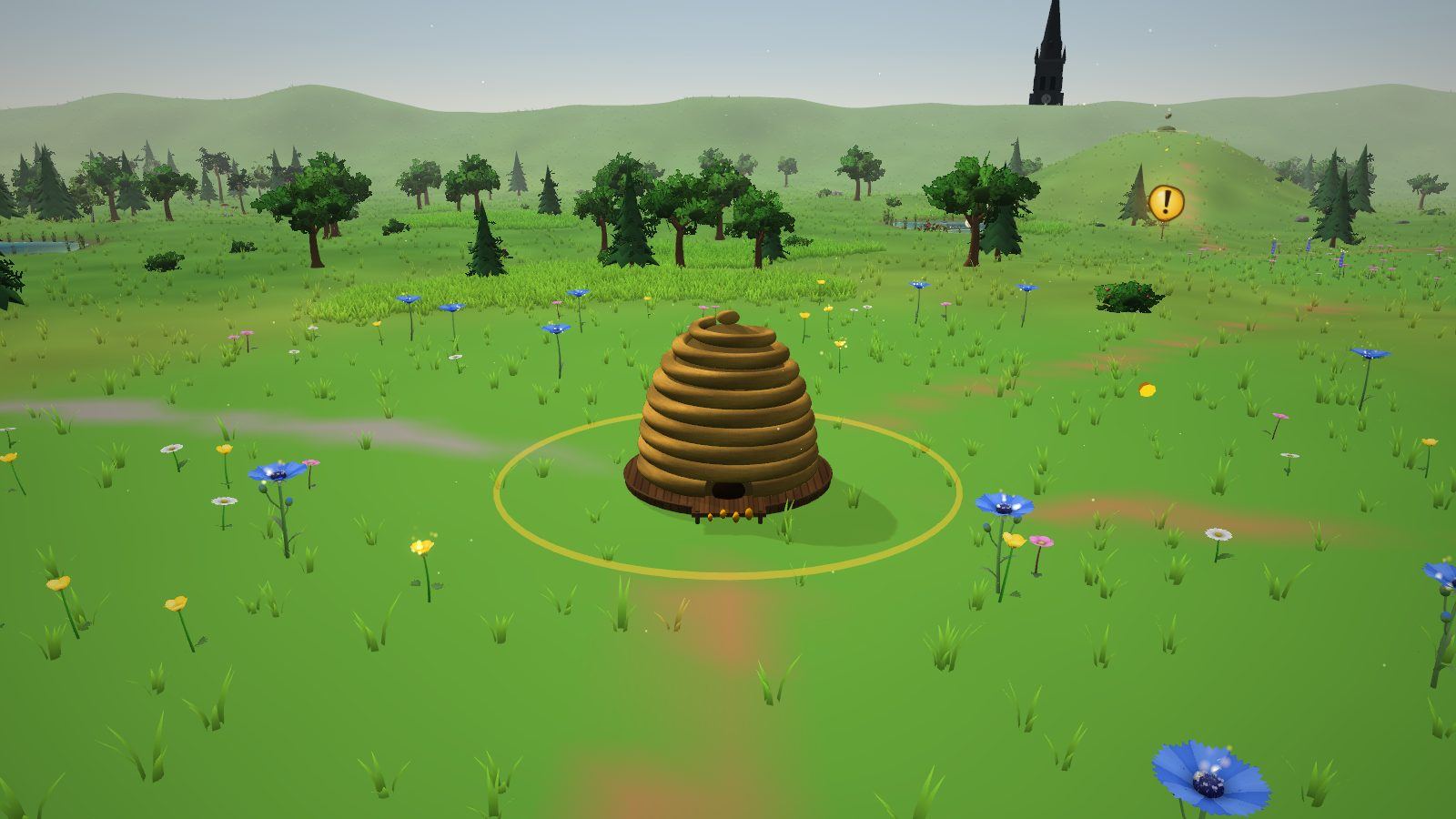
You hatch in a hive in Clover Valley. You learn to fly, find the best flowers, make honey and look after the young. You make friends. Then things go wrong: a trap, a long winter in a dark forest, a journey through the mines, and a valley at war.
psybee is a full game with a story, characters and a world to explore. Woven into it are puzzles and challenges based on well-known psychology experiments: which flower to trust, when to take a risk, how to guard the hive when you can't be sure where the danger will come from.
You simply play. The game does the rest.
The science
Behavioural phenotyping for mental health
Mental health is still mostly measured by asking people how they feel: questionnaires and interviews. These matter, but they miss much of what happens in daily life: how we act.
How quickly do you learn from a good or a bad experience? Do you explore, or stick with what you know? How do you weigh a risk, or decide when you don't have all the information? Researchers can measure these tendencies precisely with behavioural tasks. Together they form a person's behavioural phenotype: a profile of how they learn, decide and cope. Such profiles relate to anxiety, low mood and other aspects of mental health.
The problem
Lab tasks are short, repetitive and studied one at a time. People get bored, and a few minutes in a lab says little about the rest of life.
Our idea
Put many tasks into one game that people want to play, for weeks. In one world, in one story, we see how learning, exploring, risk and mood fit together in the same person, over time.
The goal
Better ways to understand mental health, built on how people actually behave, and one day better ways to help them.
Experiments you can play
Each challenge in the game is built on a published psychology experiment. Here are a few of them.
psybee is a research tool. It does not diagnose or treat anything, and it is not a substitute for professional help.
Our philosophy
Telling the bees
For hundreds of years, beekeepers in Ireland and Britain kept an old custom. Whenever something happened in the family (a wedding, a new baby, a death), someone went out to the hives, knocked softly and told the bees.
psybee works in the same spirit. Now and then a little bird in the game asks how you are feeling. What you tell it helps us understand how mood shapes what people do. And things often feel lighter once they are said out loud.
1 The mind is not a list of tests
We learn, explore, take risks, feel and decide all at once, in a world that keeps changing. We want to study the mind that way too.
2 A real game first
If it isn't worth playing, it isn't worth studying. psybee has to be a game people enjoy and come back to.
3 A world you can learn
Every flower and creature behaves the same way everywhere in the game. What you learn carries over, as it does in life.
4 Respect for players
Your play is stored under a random player number, not your name. Studies explain what they record before they start, and questionnaires are always optional.
Stay in touch
Be the first to play
Leave your email and we'll let you know when psybee opens, and when there are new parts of the story and new studies to take part in. A few emails a year, no more.
Who we are
Researchers at University College Dublin
psybee is made by a team of researchers at University College Dublin who study how people learn, make decisions and deal with uncertainty, and what this means for mental health. We build the game ourselves, from the flowers of Clover Valley to the experiments hidden in its story.
We would love to hear from players, researchers and anyone curious about the project.
hello@psybee.ie